What Is a Thread Mill? Complete Guide to Thread Milling
In modern CNC machining, threaded features are one of the most important structures used to fasten and connect multiple components. Therefore, a stable thread machining process has become particularly important. Traditionally, threads are produced by tapping, which has been used for a long time and remains the primary method for machining internal threads. However, with the advancement of technology, the increasing use of high-hardness materials, complex parts, and the growing demand for high-precision machining, thread mills have gradually become the preferred choice for metalworking companies that require high-precision threading.
So, what is a thread mill? How does it differ from a tap? What are the advantages and application scenarios of thread milling? In this article, we will answer these questions and provide a comprehensive analysis of thread milling technology to help you choose the most suitable threading solution.
What Is a Thread Mill?
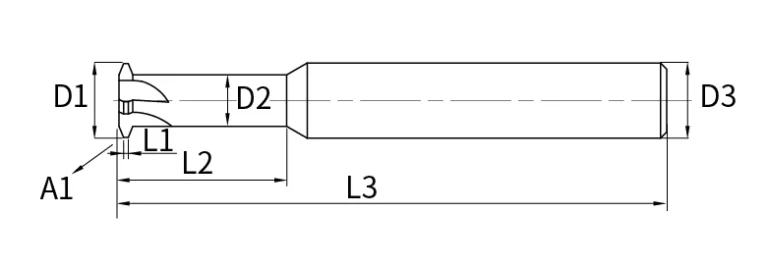
A thread mill is a precision thread-cutting tool. It is made of carbide and uses circular interpolation movements on a CNC machine to remove material layer by layer, creating high-precision internal or external threads.
A thread mill operates through spindle rotation that drives the tool, while the X and Y axes perform circular interpolation movements and the Z axis controls the thread pitch through its feed motion. These movements work together to gradually cut a complete, high-precision thread.
Unlike traditional taps that directly rotate and form threads, tapping forces the tool into the hole along the thread path. A thread mill, on the other hand, rotates around the wall of the hole and performs helical cutting.
How Thread Milling Works
Thread milling generally involves the following steps:
- Drill a suitable pilot hole before machining. Different thread sizes require different hole diameters.
- After the pilot hole is prepared, enter the machining area from the center of the hole.
- Use CNC control to guide the thread mill along the thread toolpath.
- Continue one or more circular passes until the thread is completely machined.
Main Types of Thread Mills
Thread mills are mainly divided into:
- Single-form thread mills
- Multi-form thread mills
- Full-profile thread mills
- Internal thread mills
- External thread mills
Differences Between a Thread Mill and a Tap
Compared with traditional tapping, thread mills offer excellent chip evacuation, high precision, lower risk of tool breakage, longer tool life, and a wider machining range. However, thread milling also requires higher CNC machine capabilities.
Why Are More Factories Choosing Thread Milling?
- Compared with traditional taps, thread mills have an extremely low risk of breakage during machining. Even if tool damage occurs, the broken tool is generally easier to remove.
- Using thread mills can greatly reduce production costs because one thread mill can machine different thread diameters with the same pitch.
- Thread mills demonstrate excellent stability when machining difficult materials such as stainless steel, titanium alloys, and nickel-based alloys.
- Thread mills can machine large thread sizes such as M30, M50, M100, and even larger diameters.
- For high-end components, surface finish, accuracy, and pitch control are all critical, and thread mills perform exceptionally well in these areas.
Typical Industries for Thread Milling
Thread milling is widely used in:
- Aerospace
- Automotive manufacturing
- Mold and die manufacturing
- Medical device manufacturing
- Oil and gas industry
How to Choose the Right Thread Mill
The following factors should be considered when selecting a thread mill:
- Thread standard
- Workpiece material
- Hole depth
- CNC system capability
Future Trends of Thread Milling
Advancements in modern technology and the widespread adoption of five-axis machining centers are gradually enabling thread mills to replace traditional tapping processes. In addition, the rapid growth of new energy vehicles, aerospace manufacturing, and the medical industry has created significant demand for thread milling. As a result, the thread milling market is expected to continue growing.
Conclusion
Thread mills have become an indispensable machining solution for modern manufacturing companies. Their efficiency, precision, and flexibility have earned the trust of manufacturers machining stainless steel, titanium alloys, high-temperature alloys, and large-diameter threads.
ZLY has extensive professional experience in thread milling solutions. If your production line is currently facing challenges such as tap breakage, unstable thread quality, or difficult-to-machine materials, feel free to contact us. We are ready to help you improve your threading performance and productivity.